Category: Technical Articles

  • Tech Article – Accuracy of Liquid Flow Meters – % Reading vs % Full Scale

    Tech Article – Accuracy of Liquid Flow Meters – % Reading vs % Full Scale

    Q: What is the difference between an accuracy claim % of Reading versus an accuracy claim % of Full Scale?

    Max: Your true flow rate of the liquid being measured can be a challenging value to determine no matter what type of liquid flow meter you are using. One of the key values to determine how “true” your meter is reporting is to know if the meter’s accuracy performance is based on “% Reading” or “% Full Scale” (also known as Range).

    Let’s use a sample flow meter that has a maximum flow rate of 1000 cc/min with a turndown of 100:1, so it can measure a minimum flow rate of 10 cc/min. To focus on the accuracy of the data, we will assume the viscosity, pressure, temperature, flow profile, and all other factors that affect different types of liquid flow meters are fixed and not significant to the results for this explanation.


    If this 1000 cc/min meter has an accuracy of 0.5% of Full Scale, the permissible error at each output flow rate changes linearly within the specified turndown range. Here are some sample readings:

    Full Scale Accuracy Table


    If this 1000 cc/min meter has an accuracy of 0.5% of Reading, it has a permissible error of ±0.5% across all measurement data being output. Here are the same sample readings:

    Reading Accuracy Table


    Comparing the readings of the two meters shows that the meter with a stated accuracy of reading provides flow rate data closer to the true flow rate in the system than a meter with a stated accuracy of full scale because the error of the meter is measured based on the current flow rate output rather than the maximum flow rate output.

    Accuracy Reading v Full Scale Chart
    Accuracy Reading v Full Scale Chart

    So when you are comparing flow meters and how they provide your measurement data, remember that the best value for the data you need depends on selecting the meter that provides the closest data to your true flow across all your application flow rates.


    TECH-ART-1022 -Accuracy Reading vs Full Scale – Download the PDF HERE.
  • Tech Article – Grounding Max Analog Transmitters

    Tech Article – Grounding Max Analog Transmitters

    Q: Can I wire a Max Flow Meter with an analog transmitter to loop power (2-wire) or a non-isolated (3-wire) system?

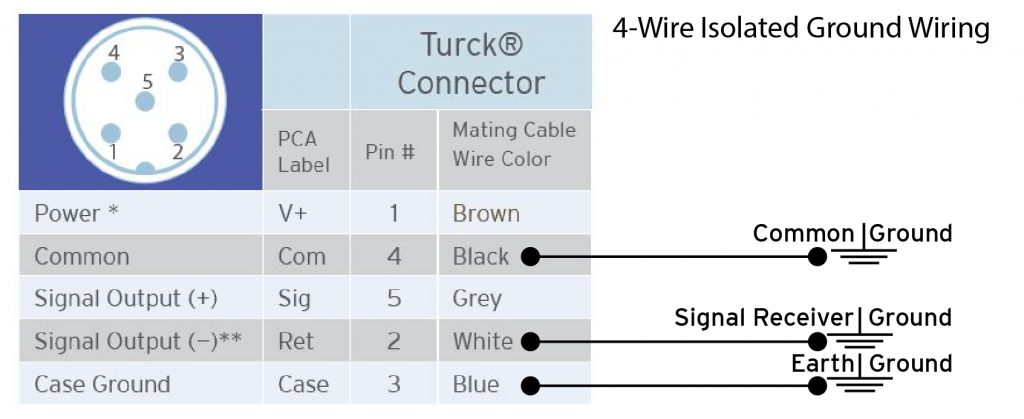
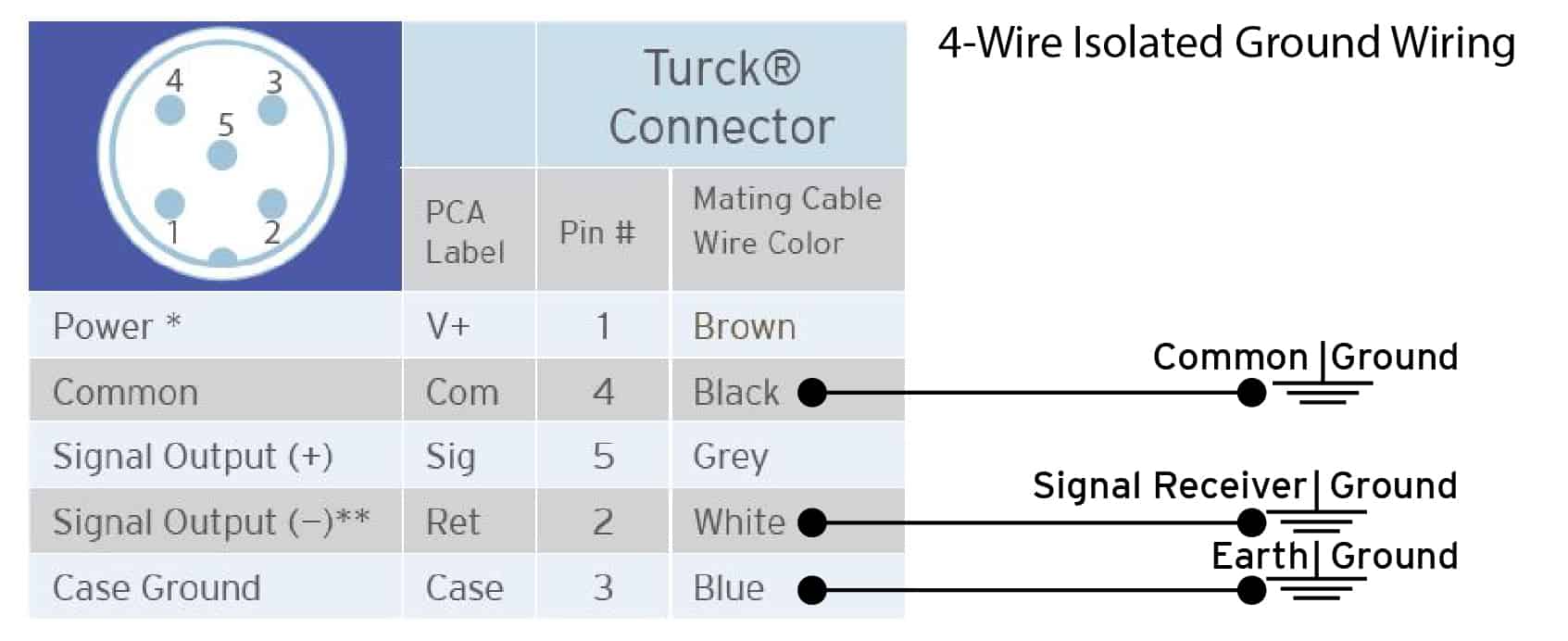
    Max: We have many customers using Max Precision Flow Meters with the 4-20 mA Analog transmitter option that ask about alternative wiring methods to the standard 4-wire fully isolated installation shown in the manual. To download the manual for you meter, go to www.maxmachinery.com/downloads and select the manual for your meter from the list. Here is the wiring diagram from the manual:

    4-wire Isolated Diagram

    Max Precision Flow Meters are designed to be in a fully isolated electrical system for optimum performance and maximum data transfer with the least electrical interference that is possible.

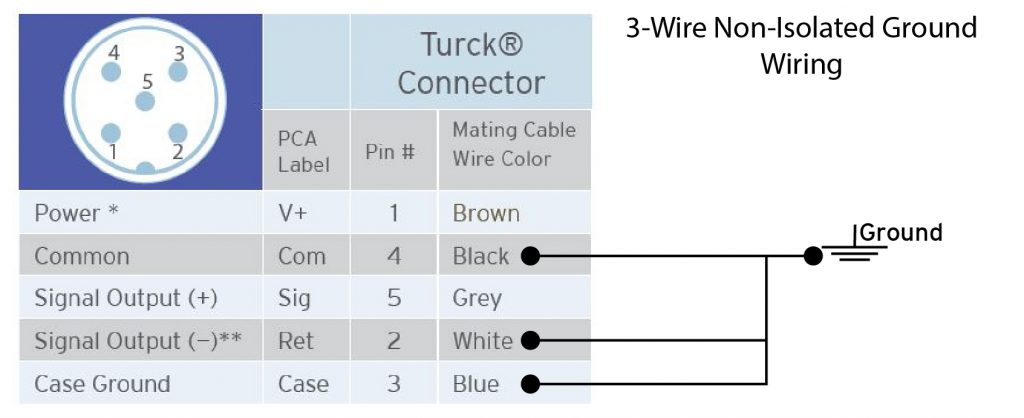
    If your system is not designed to take advantage of the maximum performance of your Max Flow Meter and the cost to upgrade is prohibitive, Max Meters can be used in a non-isolated (3-wire) system. Max Flow Meters will not operate in a 2-wire or loop powered system as the power requirements for the meter exceed loop power specifications. For non-isolated systems where a single ground is provided, follow the diagram below to wire in any Max Flow Meter with an analog transmitter:

    3-wire Non-isolated Wiring Diagram

    Once you have confirmed your system is providing measurement data, be sure to verify and filter out the noise that will occur due to the shared ground. Depending upon the data stream, the application environment, and the other equipment in use, the interference may be none, little, or significant.

    If you are still having trouble with the data you are collecting, you may always reach out to Max Machinery or one of our sales partners for free technical support. Click Here to Contact Us.


    TECH-ART-1021 -Grounding Analog Transmitters – Download the PDF HERE.